

Business growth brings new opportunities, but it also creates operational challenges. As a company expands, managing inventory, finances, employees, customer information, and daily workflows becomes more complicated. When these activities rely on disconnected software or manual processes, teams may struggle to maintain efficiency.
This is where ERP development services can make a meaningful difference. By connecting essential business functions through a unified system, companies can improve coordination, reduce repetitive work, and prepare their operations for future growth.
For businesses looking to modernize their operations, SerpentCS offers ERP-related expertise to help align technology with changing business requirements.
Why Is ERP Development Important and What Is It?
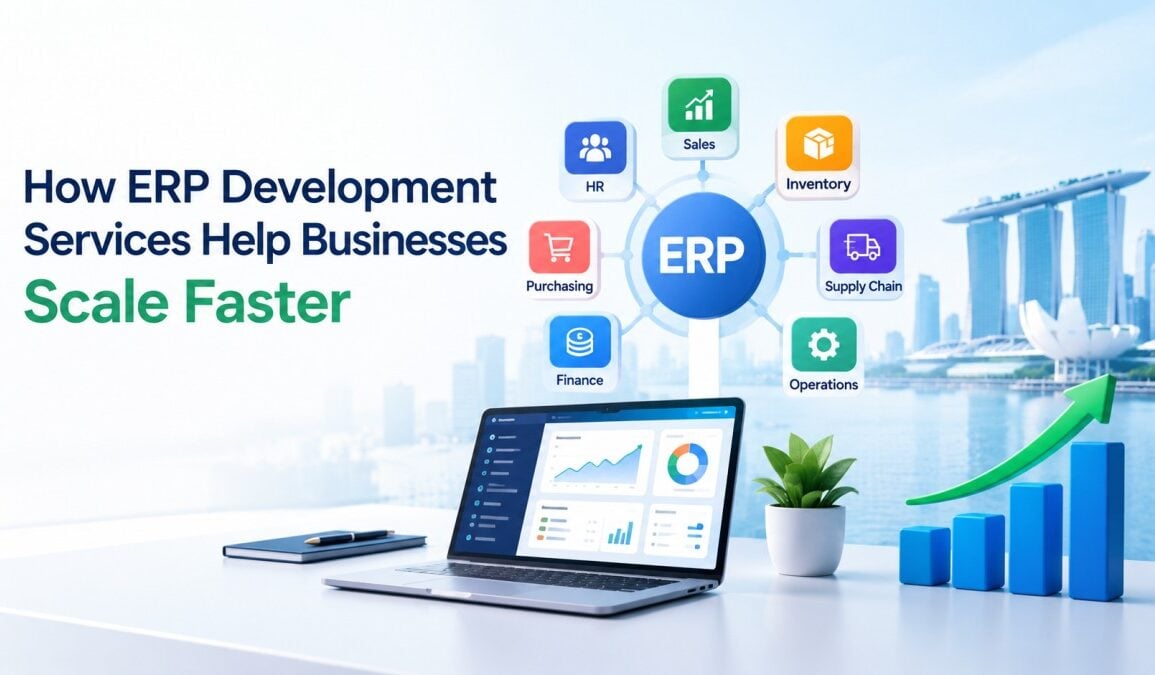
Enterprise Resource Planning (ERP) software brings multiple business processes together within a centralized platform. Instead of maintaining separate systems for accounting, inventory, sales, purchasing, and human resources, organizations can manage these functions through an integrated solution.
ERP development involves building, customizing, or extending ERP software according to a company’s workflows, operational needs, and long-term objectives.
A well-planned ERP system gives teams better access to business information, supports consistent processes, and helps management make decisions using more reliable data. These advantages become particularly valuable when a company grows beyond its existing operational capacity.
How ERP Development Services Help Companies Expand
1. Automate Repetitive Business Tasks
As businesses expand, routine activities such as preparing invoices, updating stock records, processing orders, and generating reports consume more time. Manual work also increases the possibility of errors and inconsistent records.
ERP development services help automate suitable workflows, allowing employees to spend less time on repetitive administration and more time on productive activities.
For example, when a sales order is confirmed, an integrated ERP system can help coordinate inventory updates, delivery preparation, and invoice generation. This reduces unnecessary handovers between departments and helps orders move through the business more efficiently.
2. Connect Departments Through One System
Disconnected software can create information gaps between departments. The sales team may have different stock figures from the warehouse, while the finance team may struggle to reconcile transactions across multiple applications.
An integrated ERP solution creates a shared operational environment. Authorized employees can access relevant information according to their roles, helping departments coordinate their activities more effectively.
This connected approach becomes increasingly important when a business operates across several branches, warehouses, or locations.
3. Improve Decision-Making With Real-Time Information
Business expansion requires timely decisions about pricing, purchasing, staffing, inventory, and investment. However, these choices may be challenging due to out-of-date reporting and insufficient information.
ERP systems can bring operational data together in dashboards and reports, helping managers monitor important business indicators.
Depending on the system’s configuration, businesses can track sales performance, stock movement, outstanding payments, operating expenses, and order status. Better visibility allows decision-makers to identify potential problems earlier and respond with greater confidence.
4. Build a System That Grows With the Business
A software solution that works for a small team may become difficult to manage when transaction volumes increase, or new business units are introduced.
Custom ERP development allows companies to adapt their software to specific requirements. Businesses can introduce additional modules, refine approval workflows, integrate new applications, or support more complex operations as their needs evolve. It is to develop a practical solution that supports current operations while allowing room for future expansion.
5. Strengthen Inventory and Supply Chain Management
Inventory problems can affect cash flow, customer satisfaction, and profitability. Overstocking ties up working capital, while stock shortages can delay orders and damage customer relationships.
ERP development can connect purchasing, warehouse management, sales, and inventory records. With appropriate configuration, teams can monitor stock levels, review product movement, manage purchase orders, and identify replenishment requirements.
For manufacturers and distributors, these capabilities can improve coordination between procurement, production, storage, and delivery.
6. Reduce Operational Complexity Across Locations
Businesses entering new markets or opening additional branches need consistent processes without losing the flexibility to meet local requirements.
ERP software can help standardize workflows, reporting, and approval procedures across locations. Depending on the solution, it may also support different currencies, tax configurations, warehouses, and organizational structures.
For companies expanding internationally, careful planning is essential to ensure the ERP system accommodates applicable regulations and regional business practices.
Why ERP Development in Singapore Is Important for Expanding Businesses
Singapore is an important business hub for companies operating across Southeast Asia and international markets. As organizations expand, they may need better coordination between finance, inventory, customer management, procurement, and regional operations.
ERP development in Singapore is a relevant consideration for businesses seeking software solutions tailored to their operational processes and growth plans.
A suitable ERP development partner should understand the company’s business model, existing technology, integration requirements, and future objectives. It is also important to consider data security, access permissions, reporting needs, scalability, and relevant local compliance requirements.
Businesses should evaluate potential partners on technical capabilities, industry experience, implementation planning, and ongoing support rather than selecting a provider based on cost alone.
SerpentCS can be considered by organizations exploring ERP development and customization options that align with their business requirements.
Key Factors to Consider Before Investing in ERP Development
Before starting an ERP project, businesses should define the operational problems they want to solve. A clear implementation plan helps avoid unnecessary complexity and keeps the project focused on measurable outcomes.
Consider these priorities:
- Business requirements: Identify processes that need automation, integration, or improvement.
- Scalability: Choose an architecture that can accommodate expected growth.
- Integration: Check compatibility with existing accounting, CRM, e-commerce, and other business applications.
- Data migration: Plan how existing records will be transferred, cleaned, and verified.
- Employee training: Help employees understand the new workflows and use the system correctly.
- Ongoing maintenance: Account for updates, security, performance monitoring, and future enhancements.
A phased implementation may also help organizations introduce important functionality first, gather feedback, and expand the system gradually.
Conclusion
Scaling a business requires more than increasing sales or hiring additional employees. Companies also need reliable processes, connected information, and technology that can support growing operational demands.
Well-planned ERP development services can help organizations automate routine work, improve departmental coordination, strengthen reporting, and build a more flexible operational foundation. The right solution depends on business objectives, existing systems, and the complexity of future expansion.