


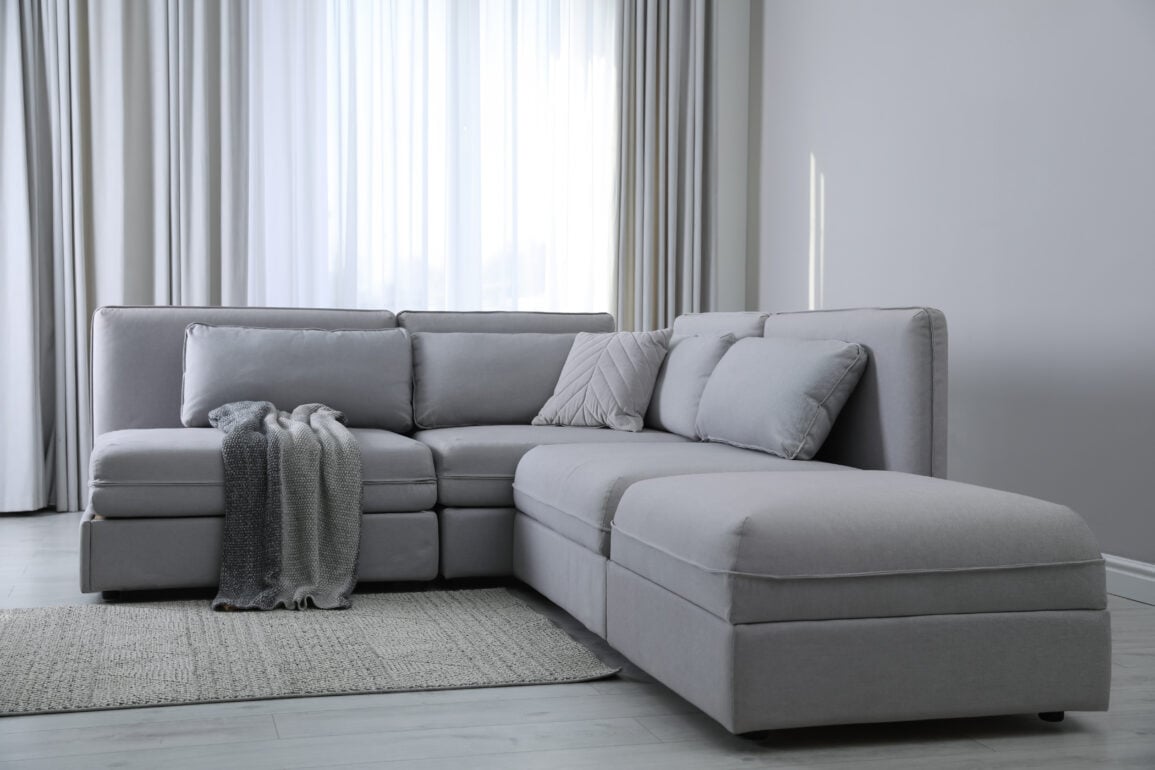
Choosing between a sectional and a sofa is one of the most consequential decisions you’ll make when furnishing a living room. It’s not just about personal taste—it’s about how you live, how much space you have, and how your room needs to function day to day. Get it right, and your living room feels effortless. Get it wrong, and you’re left squeezing past furniture or staring at an awkward, half-empty room.
Understanding the Basics
A sofa is the classic choice: a single, straight piece of furniture that typically seats two to four people. It’s versatile, easy to place against a wall, and works in almost any room shape. A sectional, on the other hand, is made up of multiple connected pieces, usually arranged in an L-shape or U-shape, designed to maximize seating while creating a more enclosed, lounge-like feel.
Both options serve the same basic purpose, but they do it in very different ways. The right choice depends less on which one is “better” and more on which one fits your space and lifestyle.
Measuring Your Space
Before falling in love with a particular style, take a hard look at your room’s dimensions. Sectionals tend to dominate a space. They’re ideal for larger, open-concept living rooms where you want to define a cozy seating area without walls or dividers. If your living room flows into a dining area or kitchen, a sectional can act as a natural boundary.
Sofas shine in smaller or more traditionally shaped rooms. They take up less visual and physical space, leaving room to move freely and incorporate other furniture like armchairs, side tables, or a bookshelf. If your living room doubles as a walkway or needs to accommodate multiple functions, a sofa’s compact footprint is often the smarter choice.
A good rule of thumb: measure your room, then map out furniture placement with painter’s tape on the floor. It sounds tedious, but it prevents the common mistake of buying something that technically fits but makes the room feel cramped.
Thinking About Lifestyle and Function
Beyond square footage, think about how you actually use your living room. Do you host movie nights with friends sprawled across the furniture? A sectional, especially one with a chaise, invites lounging and casual gatherings. Families with kids often gravitate toward sectionals because they offer flexible seating for everyone without needing extra chairs.
If your living room is more of a formal space, or if you entertain in smaller groups, a sofa paired with accent chairs can create a more conversational, intimate layout. Sofas also make it easier to rearrange a room, since they’re a single piece rather than a bulky, connected unit.
Flexibility Matters More Than You Think
Here’s something worth considering: your needs today might not match your needs in a year or two. Maybe you’re renting and unsure how long you’ll stay in your current space. Maybe your lifestyle is in flux—a move, a growing family, or simply the desire to switch things up without a long-term commitment.
This is where furniture rental becomes a practical alternative to buying outright. Instead of committing to a sectional that might not fit your next apartment, or a sofa that feels too small once your living situation changes, renting lets you adapt your layout as needed. It removes the pressure of making a “permanent” decision and gives you room to experiment with what actually works for your space.
Style and Aesthetic Considerations
Sectionals create a lived-in, relaxed atmosphere. They tend to suit casual, contemporary interiors and work well as the visual anchor of a room. Sofas offer more styling flexibility—they pair easily with various chair styles, rugs, and layouts, making them a better fit for eclectic or evolving design preferences.
Making the Final Call
There’s no universal right answer here. A sectional makes sense for larger rooms, growing families, and anyone who prioritizes lounging space. A sofa suits smaller or multi-purpose rooms, formal layouts, and those who value flexibility in rearranging their space.
Whichever direction you lean, take time to measure, visualize, and consider how your needs might shift. And if commitment feels premature, remember that renting gives you the freedom to find your perfect layout without the long-term stakes.